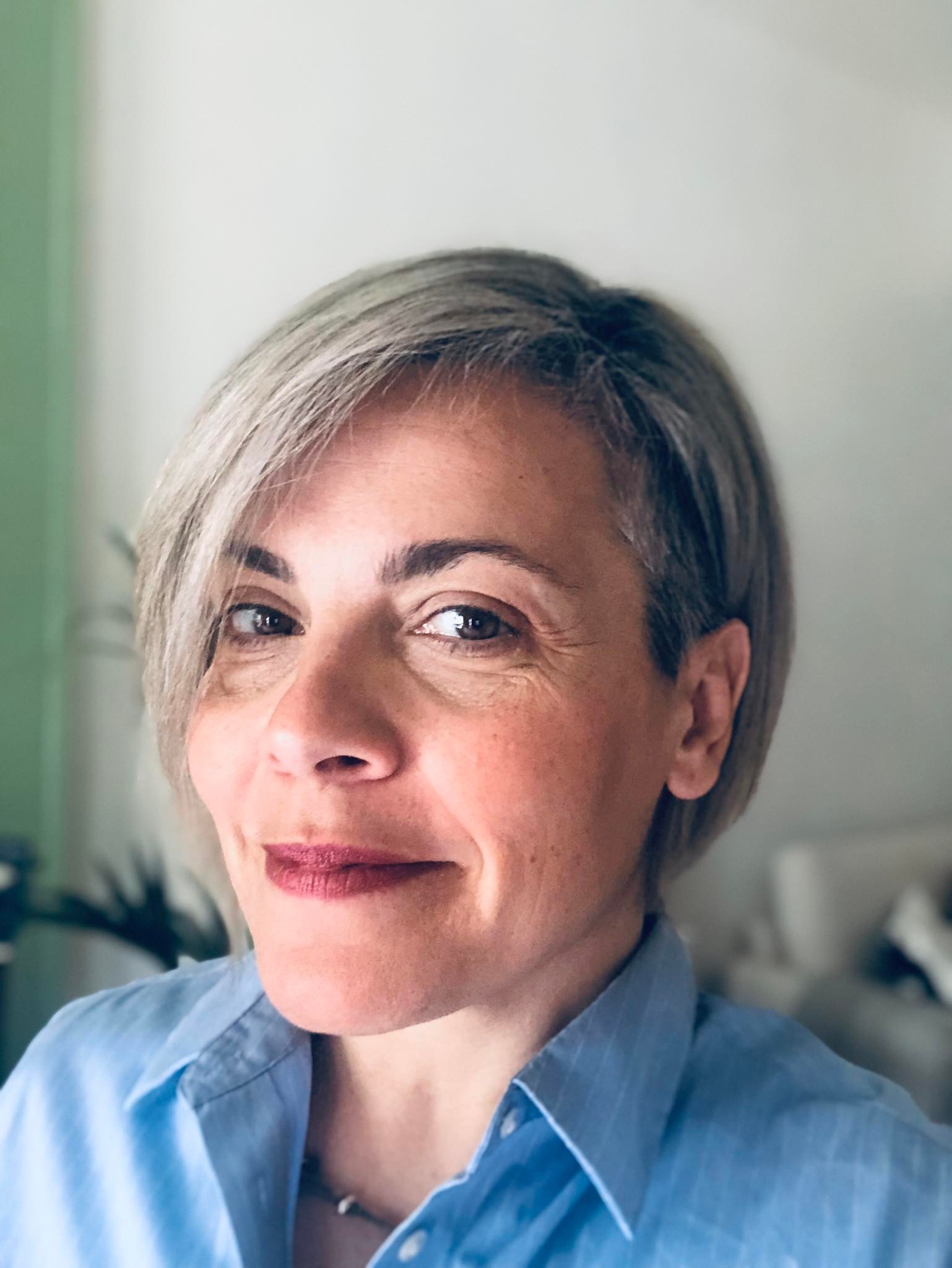
Kallia Katsampoxaki-Hodgetts
Regular Research Staff, Specialised Educational Staff Member, School of Science and Technology
- katsampoxaki@uoc.gr
- +30 2810 545102
- Administration Building 2 – Dean’s Office, Voutes University Campus, Heraklion, Crete
- Group:Ινστιτούτο Έρευνας στην Εκπαίδευση και τις Ψηφιακές Ανθρωπιστικές και Κοινωνικές Επιστήμες EN
Kallia Katsampoxaki-Hodgetts
Regular Research Staff, Specialised Educational Staff Member, School of Science and Technology
Dr Kallia Katsampoxaki-Hodgetts is a member of the Specialised Educational Staff at the School of Science and Technology, University of Crete. Her teaching, research, and scholarly work spans educational assessment, curriculum design, multiliteracies, multimodality, university pedagogy, and science education. She completed her PhD at the University of Zaragoza in 2023, receiving the final grade Sobresaliente. Her doctoral dissertation, entitled Digital innovation in scientific research articles in the field of Chemistry: Implications for the teaching of different genres and the development of academic and digital literacies, examined the digital and multimodal transformation of scientific publications in Chemistry and its implications for the teaching of scientific genres, academic writing, and the development of digital and multimodal literacies. She has served as Coordinator of the Teaching and Learning Centre of the University of Crete (KEDIMA) and is the University of Crete’s Innovation Leader within the INGENIUM European University Alliance. She leads research and educational initiatives on inclusive assessment, feedback, and the redesign of teaching in higher education. She also participated in the European COALITION project, which focused on university pedagogy and teaching in higher education. From 2024 to 2026, she conducted postdoctoral research in the Department of Primary Education at the University of Ioannina, focusing on multiliteracies and multimodality in primary and secondary science education and their relationship to active citizenship, with and without Artificial Intelligence.
Research Interests: Educational assessment, Assessment for and as learning, Design of inclusive and democratic curricula, University pedagogy, Professional development of university teachers, Multiliteracies, Multimodality, Science communication, Science education, Digital literacy, Critical pedagogical use of Artificial Intelligence.
Selected Recent Publications
- Katsampoxaki-Hodgetts, K., Kotsidis, K., Papadakis, S., & Anastasiades, P. (2026). AI as an epistemic scaffold: Designing assessment with AI resources in early science education. In K. Katsampoxaki-Hodgetts (Ed.), Assessment in the age of AI: Inclusive design, reflexive pedagogies and multimodal literacies. Disigma. https://doi.org/10.5281/zenodo.20327321
- Katsampoxaki-Hodgetts, K. (2026). From product to process: Operationalising assessment as learning in an AI-mediated science communication course. In K. Katsampoxaki-Hodgetts (Ed.), Assessment in the age of AI: Inclusive design, reflexive pedagogies and multimodal literacies. Disigma. https://doi.org/10.5281/zenodo.20327061
- Katsampoxaki-Hodgetts, K., Kotsidis, K., Papadakis, S., & Anastasiades, P. (2025). Reimagining preschool pedagogy: AI-enhanced teaching through multiliteracies-informed curriculum innovation. In Science and Technology Education: Expectations and Experiences. Proceedings of the 6th International Baltic Symposium on Science and Technology Education (pp. 104–119). Scientia Socialis.
- Neochoritis, C. G., Xyrafaki, S., Giannakaki, M.-A., Nikovia, K., Anastasiou, P.-K., & Katsampoxaki-Hodgetts, K. (2026). Multicomponent reactions meet multimodal assessment: Critical reflection, peer-feedback, and rubrics for video design. Journal of Chemical Education. https://doi.org/10.1021/acs.jchemed.5c01205
- Katsampoxaki-Hodgetts, K. (2024). Graphical abstracts’ pedagogical implications: Skills and challenges in visual remediation. English for Specific Purposes, 73, 141–157. https://doi.org/10.1016/j.esp.2023.10.006
- Jaleniauskiene, E., & Katsampoxaki-Hodgetts, K. (2023). Multimodal remediation of research articles through infographics and graphical abstracts. Communication Teacher. https://doi.org/10.1080/17404622.2023.2248231
- Katsampoxaki-Hodgetts, K. (Ed.). (2026). Assessment in the age of AI: Inclusive design, reflexive pedagogies and multimodal literacies. Disigma Publications.
- Katsampoxaki-Hodgetts, K., O’Mahony, T., & Weaver, C. (Eds.). (2026). Inclusive assessment design in higher education: Feedback, partnership, and AI-supported design. Disigma. ISBN 978-618-202-346-4.
- Katsampoxaki-Hodgetts, K. (2025). Shaping the education of the future: Educational assessment and the design of inclusive, democratic and lived curriculum. Disigma University Publications. ISBN 978-618-202-272-6.
- Katsampoxaki-Hodgetts, K., Cope, B., & Kalantzis, M. (2024). Didactics for the cultivation of literacies and multimodality: A reflective and transformative approach in the digital era. Disigma Publications. ISBN 978-618-202-178-1.
Teaching
Certificate of Pedagogical and Teaching Competence Programme at the University of Crete:
The course ΣΘΤΕ-213: Teaching Approaches for Cultivating Multiliteracies and Teaching Multimodality in the Sciences focuses on developing critical, social, school-based, and digital literacies. It draws on the theoretical and pedagogical framework of multiliteracies and the Learning by Design model, with emphasis on the cognitive processes of experiential learning, conceptualisation, critical framing, and creative application. The course connects multimodality with inclusive education, sociocultural learning, and the development of critically literate and active citizens.
The course ΣΘΤΕ-214: Educational Assessment, Curricula and Microteaching approaches assessment as an integral part of teaching and curriculum design through successive cycles of microteaching.
Department of Chemistry, University of Crete: The course Science Communication and Technical Writing, which focuses on communicating scientific knowledge to specialist and non-specialist audiences. The course includes the study and production of research articles, abstracts, technical reports, oral presentations, graphical abstracts, infographics, educational videos, and other multimodal scientific genres. Particular emphasis is placed on scientific argumentation, academic and digital literacy, the critical use of Artificial Intelligence, and the documentation of the learning and writing processes. She also has extensive teaching experience in Academic Chemical Terminology.